
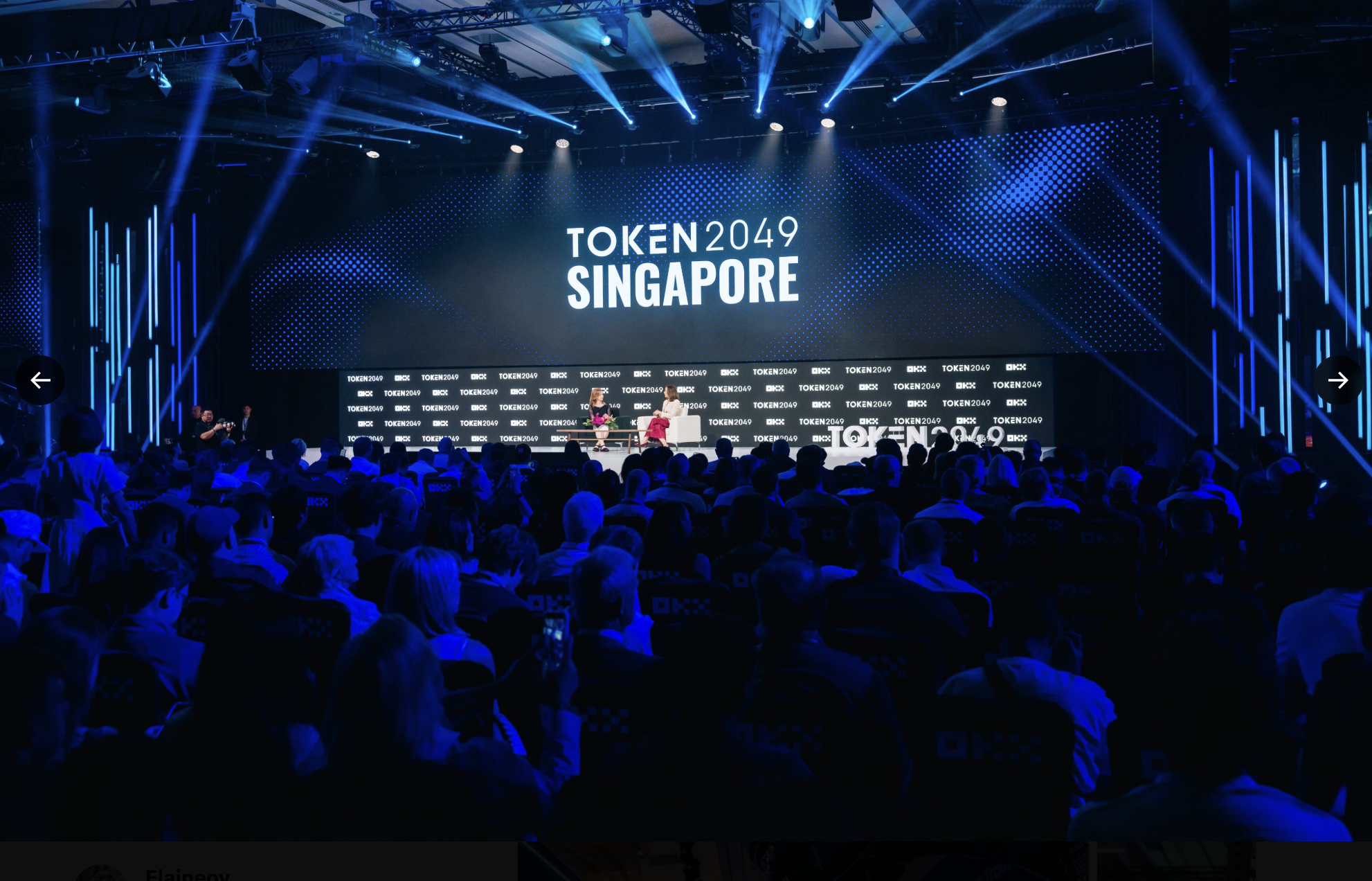
Two days before TOKEN2049 Singapore began, I wrote down a few questions I wanted the conference to answer. I was less interested in what Bitcoin might do after a keynote, or which project might become the next short-lived narrative, and more interested in whether stablecoins were becoming part of financial infrastructure, whether AI agents would actually need crypto, and whether traditional finance was entering crypto — or finance itself was beginning to move onchain.
In my earlier piece, TOKEN2049 Is No Longer Just About Crypto. What Comes Next for Finance? , I wrote that the more interesting question was no longer simply where crypto goes next, but where finance goes next. After two days in Singapore, I do not think TOKEN2049 gave us final answers, but the direction is becoming much harder to ignore.
The conference was still very much a crypto conference, with exchanges, protocols, market narratives, new products and plenty of discussion about where digital assets go next. Yet a look through the official TOKEN2049 Singapore agenda shows how much of the language has shifted toward payments, settlement, tokenized markets, institutional finance and AI agents. That is what felt different this time. Crypto is beginning to look less like a separate industry sitting outside finance and more like a collection of technologies gradually being absorbed into the financial system.
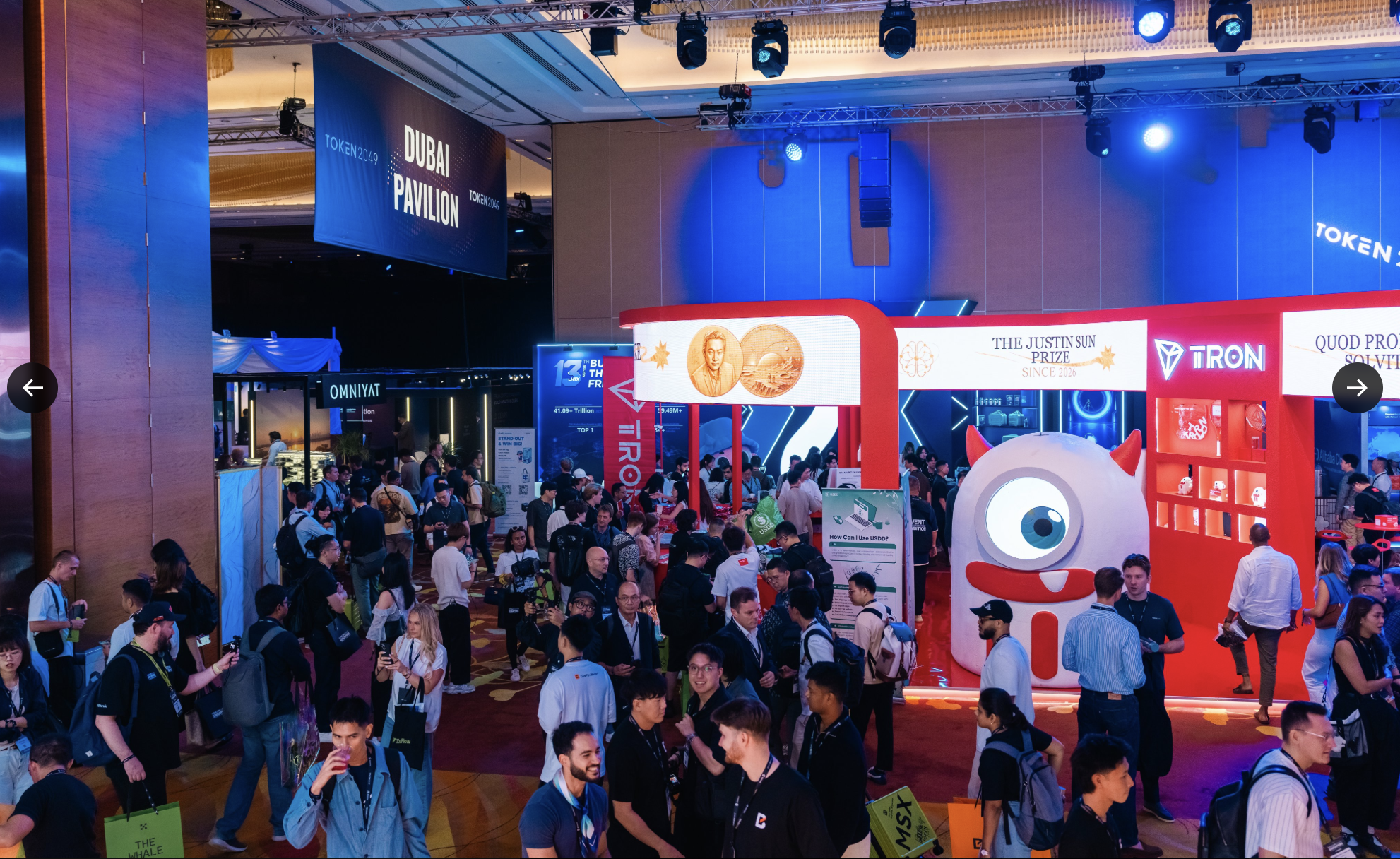
Stablecoins are moving closer to the payment layer
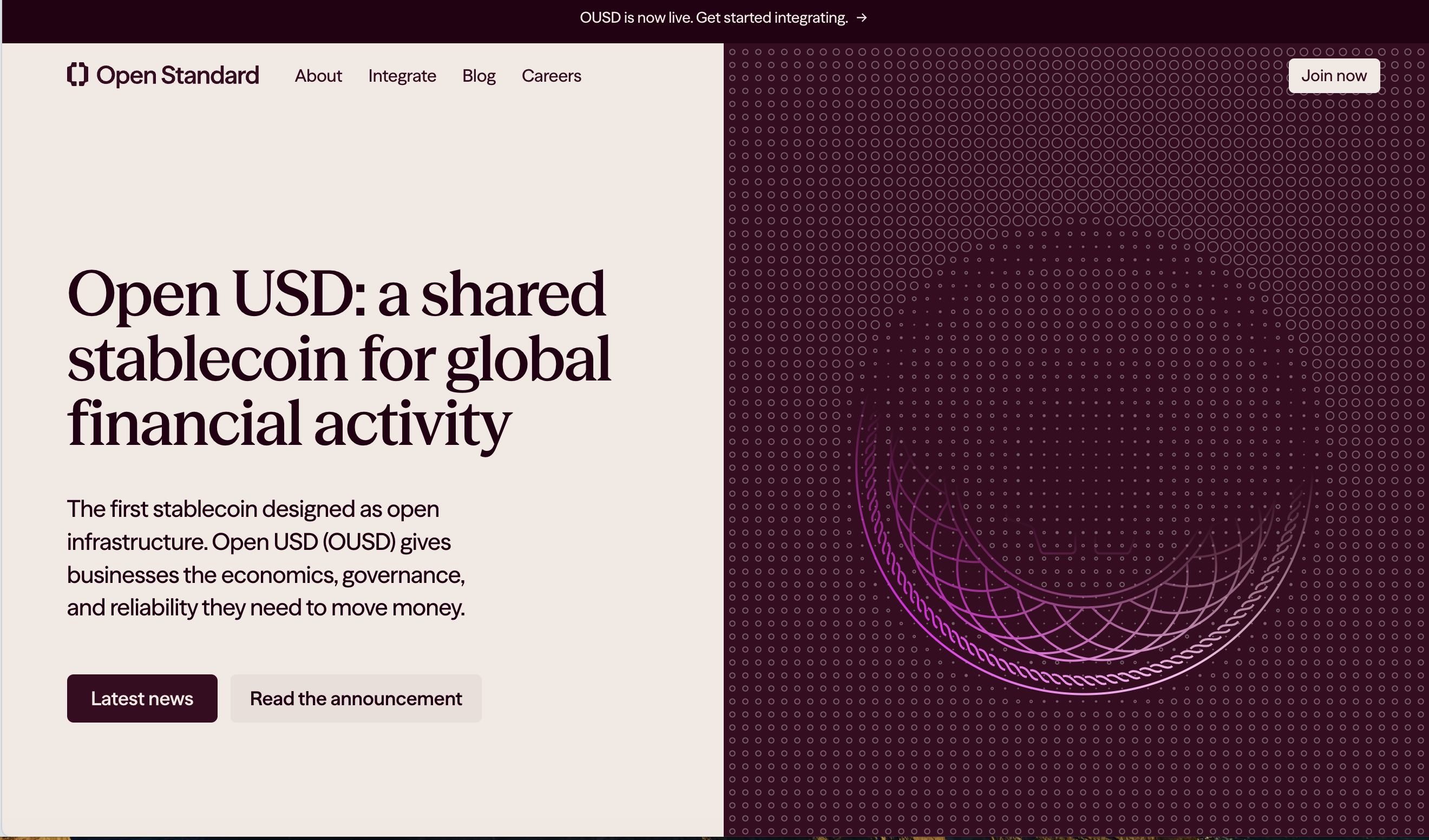
Before TOKEN2049, stablecoins were already one of the clearest examples of this shift. USDT built its position largely through liquidity and global crypto usage, while USDC became closely associated with regulated institutions and onchain finance. More recently, OUSD caught my attention because its model looks different again, relying on distribution through an ecosystem that includes Coinbase, Mastercard, Shopify, Stripe and Visa.
At TOKEN2049, the conversation around stablecoins reflected that broader change. The official agenda included sessions such as The Next Era of Stablecoin Payments and Stablecoins: The Payments Industry, Rebuilt, which already tells us something about how the discussion has moved on. Stablecoins are no longer being discussed only as trading assets or as a convenient way to move dollars between exchanges, wallets and protocols; the more important question now is whether they can also sit underneath merchant payments, treasury operations, cross-border settlement and existing card networks.
That distinction matters because the real significance may not be that consumers suddenly abandon bank accounts and begin thinking in USDC, USDT or OUSD. It may be exactly the opposite. The more successful stablecoins become as infrastructure, the less visible they may eventually be to the person making the payment. That was one of the questions I raised before TOKEN2049: will mass adoption happen when more people consciously become “crypto users”, or when people begin using crypto infrastructure without thinking about it? After this week, I am leaning even more toward the second possibility.
Stablecoins no longer seem to be fighting only for legitimacy inside crypto. Increasingly, they are competing for a place inside payments.
AI + Crypto is becoming a financial question
AI has appeared repeatedly across the crypto conferences I have followed this year, from Miami to Hong Kong and now Singapore. For a while, I found some of the AI + Crypto narrative difficult to take seriously, because putting two popular technologies into the same presentation does not automatically create a useful product.
TOKEN2049 felt slightly different because the conversation moved closer to a practical question: if AI agents eventually act on behalf of people or businesses, how will they interact with money?
The conference agenda included discussions around AI agents trading on blockchain networks and The Agent Economy: Why AI Needs Crypto. Around the conference, the conversation expanded further into agentic payments, wallets and autonomous financial activity, which makes the issue much more interesting than another round of AI-token speculation.
AI can already generate content, analyse information and automate workflows, but once an agent is allowed to purchase a service, pay for computing resources, execute a trade or send money to another agent, finance enters the picture. At that point, the questions become much more practical: who gives the agent permission to spend, who controls the wallet, what limits are placed on its transactions, and what happens if it makes the wrong decision?
If software begins transacting with software, the question of what kind of money works best also becomes unavoidable. Stablecoins and programmable onchain settlement suddenly make more sense in that context.
Singapore’s regulator appears to be thinking about the same problem from another angle. On October 7, the Monetary Authority of Singapore published new Guidelines on Artificial Intelligence Risk Management for Financial Institutions , setting out expectations around accountability, governance, testing, human oversight and lifecycle controls as AI systems become more capable and autonomous.
The timing is interesting. While parts of TOKEN2049 were asking what AI agents could do with wallets and programmable money, regulators were asking how financial institutions should remain accountable when AI becomes more autonomous. That is a sign that AI + Crypto is beginning to move beyond a technology narrative and into a financial governance question.
Tokenization is moving from “what can we put onchain?” to “how should these markets work?”
Tokenization has been discussed for years, often under the broad label of real-world assets, but this time the conversation felt more mature. The question is no longer simply whether stocks, funds or other assets can be represented on a blockchain. Increasingly, the discussion is about custody, settlement, trading hours, regulation and how tokenized assets connect with existing financial markets.
TOKEN2049 Day 2 leaned heavily in that direction, with traditional financial institutions and crypto companies discussing tokenized assets, global liquidity and onchain settlement in the same context. While the conference was taking place, Securitize announced blockchain-based tokenized stock trading for shares including Apple, Nvidia and Microsoft. Reuters reported that the products are backed by the actual underlying shares, bringing traditional equities another step closer to blockchain-based market infrastructure. Reuters: Securitize launches blockchain-based stocks
Only a few days earlier, OKXICE — a joint venture between OKX and Intercontinental Exchange — filed with the U.S. Securities and Exchange Commission seeking approval for a platform that would support 24/7 trading of tokenized U.S. securities. Reuters: OKX joint venture files for tokenized securities platform
That is a very different conversation from the early days of tokenization. The old question was what could be tokenized; now the more difficult questions are where the asset trades, how it settles, who holds the underlying security, how it connects to a regulated exchange and what happens to investor rights. Those are market-structure questions, not simply product-design questions.
Traditional institutions are moving in the same direction. On October 8, Standard Chartered announced plans to expand its digital-asset custody offering in Singapore to include selected cryptoassets, stablecoins and tokenized real-world assets for institutional and eligible corporate clients, subject to regulatory requirements.
What matters to me here is not simply that another major bank has “entered crypto”. The more important change is that digital assets are being fitted into existing institutional functions such as custody, financing and securities services. That looks much more like infrastructure than experimentation.
Regulation is deciding what gets absorbed into finance
There is an easy mistake to make when looking at all of this. As stablecoins, tokenized assets and institutional custody expand, it can look as though regulation is simply becoming more crypto-friendly. I do not think that is quite what is happening.
A better description may be that regulators are becoming more specific. They are deciding which parts of crypto can fit inside the financial system, under what conditions, and which parts still create risks they are unwilling to absorb.
Singapore is a good example. MAS continues to support institutional digital-asset infrastructure and tokenization while tightening governance around financial risk and AI. The new AI guidelines make clear that financial institutions remain responsible for how AI is used, even when third-party systems are involved.
Europe is moving in a similar direction, but through the more formal MiCA framework. On October 8, the European Securities and Markets Authority published new supervisory expectations around services linked to stablecoins that do not comply with MiCA. ESMA’s approach makes clear that the issue is not only whether a stablecoin exists, but whether authorised crypto firms can continue offering trading, custody, transfer and other services related to it inside the EU. You can read the ESMA supervisory opinion here .
At the same time, the European Banking Authority is already looking ahead to the next stage of MiCA. In September, the EBA identified areas including multi-issuer stablecoins, crypto lending, DeFi and crypto-asset classification as priorities for review. Its MiCA review priorities show that Europe has moved beyond the basic question of whether crypto should be regulated; the discussion is now about how the rules evolve as the products become more complex.
This is why I do not think the story is simply that regulation is “opening up” to crypto. Crypto is being integrated selectively. Stablecoins may become part of regulated payment infrastructure, but reserve, redemption and compliance requirements matter. Tokenized securities may move onchain, but securities law does not disappear. AI agents may eventually execute financial transactions, but accountability and risk controls become more important, not less. Some highly leveraged or difficult-to-supervise crypto products may remain outside mainstream financial infrastructure for much longer.
In that sense, regulation is not simply slowing or encouraging adoption. It is helping decide what crypto becomes finance.
The most important change may be that the boundary is becoming harder to see
Before TOKEN2049, I wondered whether crypto was still trying to build an alternative financial system outside traditional finance. After Singapore, that question feels less useful.
Stablecoins are connecting with payment networks, tokenized securities are connecting with regulated markets, banks are building custody infrastructure for digital assets, and AI agents are beginning to raise questions about programmable money and automated financial activity. None of this means the old financial system is disappearing. Banks will still exist, card networks will still exist, regulators will still regulate, and fiat currencies will still be central to the economy.
What may change is what sits underneath those systems.
A payment might involve a stablecoin without the customer ever holding a crypto wallet. A security might trade through a familiar financial interface while part of its settlement happens onchain. An AI agent might eventually make a payment using programmable money without the person behind it thinking about blockchain at all.
That is why TOKEN2049 felt different to me this time. It was still full of crypto companies and crypto-native ideas, but increasingly, the questions being discussed sounded like questions about finance itself: how payments move, how assets are held and settled, how markets operate, how regulation adapts and how autonomous software might eventually interact with money.
Crypto is not disappearing, but perhaps its next stage will be defined by becoming less visible. Instead of asking everyone to enter a separate crypto economy, parts of crypto may simply become embedded inside the economy people already use.
Two days before TOKEN2049, I asked where finance might go next. After Singapore, the answer is still incomplete, but one direction looks clearer:
Crypto is starting to look less like a separate industry — and more like infrastructure.