Illustration showing the evolution of digital finance from Federal Reserve policy and crypto markets to stablecoins, regulation, and AI-powered blockchain technology

From Fed Policy to Crypto Evolution: How Digital Finance Is Entering a New Era

Over the past few years, the crypto industry has undergone a significant transformation. In its early stages, crypto markets were largely driven by Bitcoin’s price movements and investment demand. Many users entered the market primarily because they saw digital assets as a new form of investment opportunity. However, as blockchain technology has continued to develop, the focus of the industry has gradually shifted from individual asset prices toward broader digital asset ecosystems. ...

A person stands among iridescent bubbles containing abstract AI networks as one bubble begins to burst, symbolizing the gap between AI’s potential and human expectations

The AI Bubble Is Still a Human Bubble

This week, I listened to an interview with Chinese technology investor Wang Yuquan, who made a prediction designed to attract attention: the AI bubble could burst around 2029. The exact year matters less to me than the reasoning behind it. Wang is not arguing that AI has little value. He is arguing almost the opposite: AI’s long-term potential is so significant that we may be pricing years of social and economic change into the present. ...

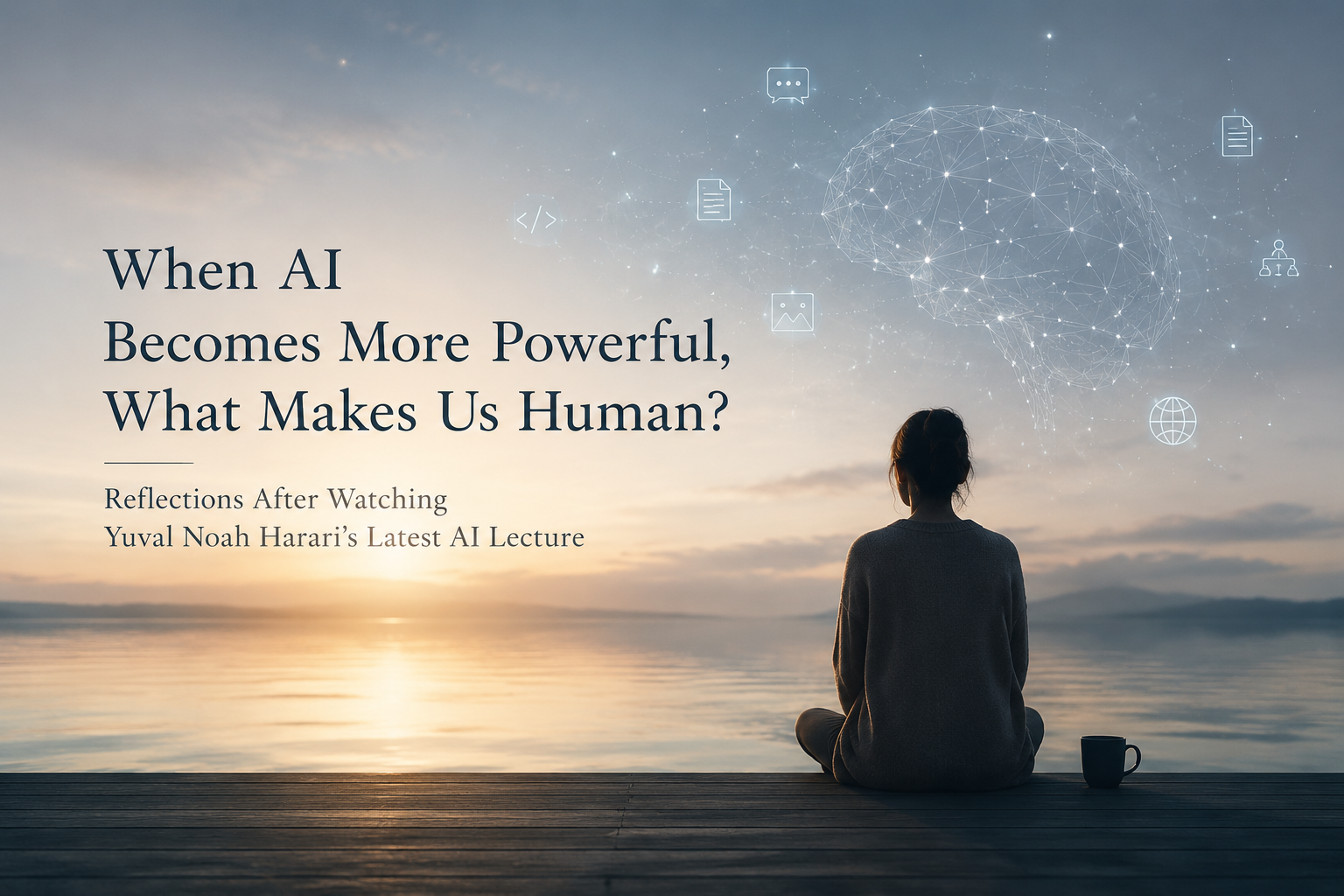
Conceptual illustration of artificial intelligence and human values, inspired by Yuval Noah Harari’s AI lecture, showing a person reflecting on creativity, judgment, and the future of humanity.

When AI Becomes More Powerful, What Makes Us Human? — Reflections After Watching Yuval Noah Harari’s Latest AI Lecture

Recently, I watched the latest lecture by Yuval Noah Harari, the author of Sapiens: A Brief History of Humankind, at the University of Oxford, titled “AI Has Hacked the Code of Human Civilization. ” In the lecture, Harari raised a thought-provoking question: as AI begins to enter areas that were once considered uniquely human, how will our role in society change? According to Harari, human civilization is essentially a network built on information and shared stories. Nations, laws, companies, currencies, and religions are all systems that exist because people collectively believe in them. For thousands of years, humans have been the creators, storytellers, and interpreters of these systems. ...

A calm evening scene of a person looking at a city skyline by the river, representing personal reflection on how AI and digital economy are reshaping work and life.

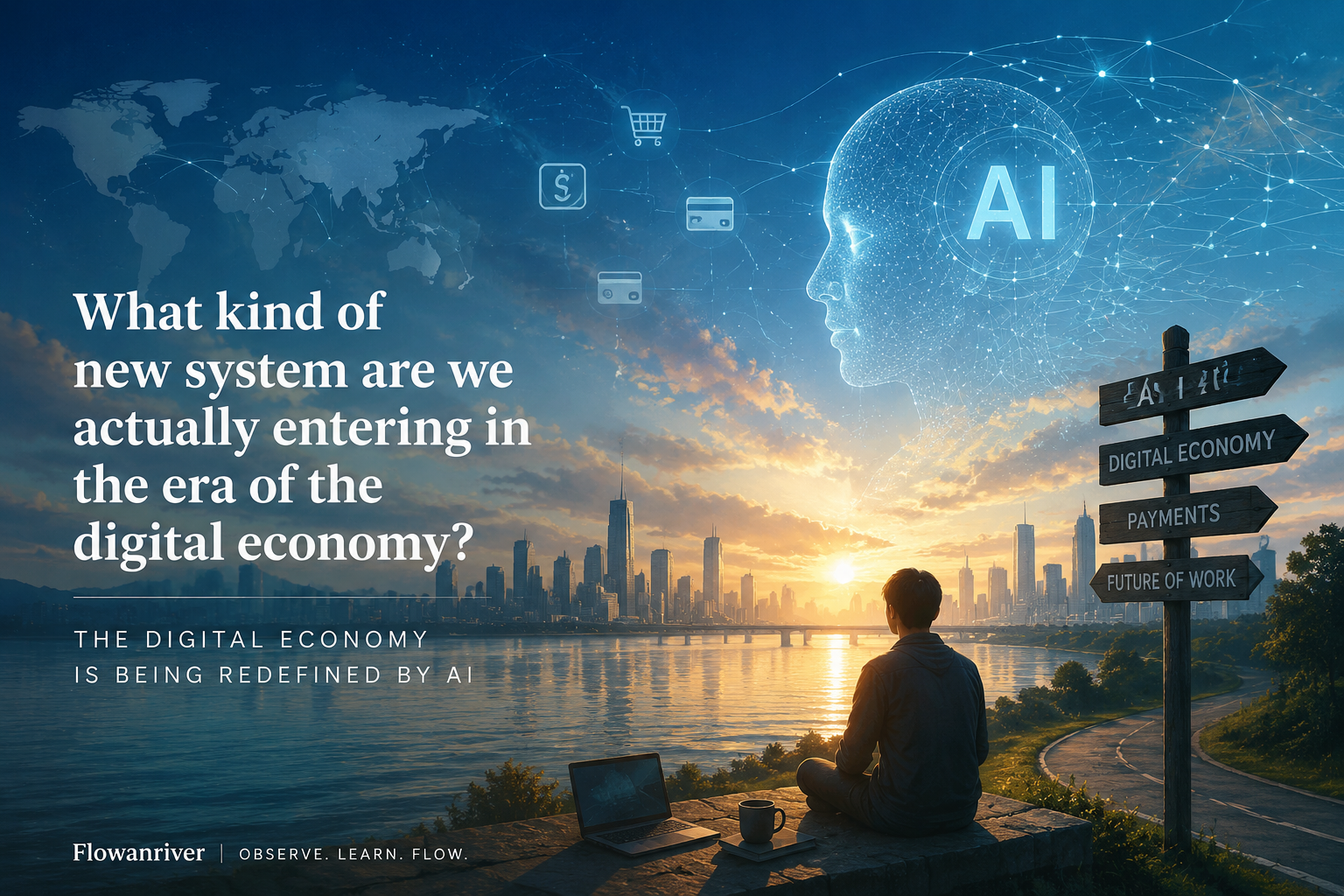
What kind of new system are we actually entering in the era of the digital economy?

The digital economy is being redefined by AI Recently, while following discussions around the Digital Economy conference in Beijing, I had a very strong impression that although the theme is still labeled as “digital economy,” the real focus has quietly shifted toward artificial intelligence. From what I have seen across different public information, whether it is industrial direction, enterprise digital transformation, or talent development systems, AI is being mentioned more and more frequently. The term “digital economy” still exists, but it no longer feels like a simple extension of the internet era. Instead, it feels more like a broader framework that is now carrying AI, data systems, and industrial restructuring together. ...

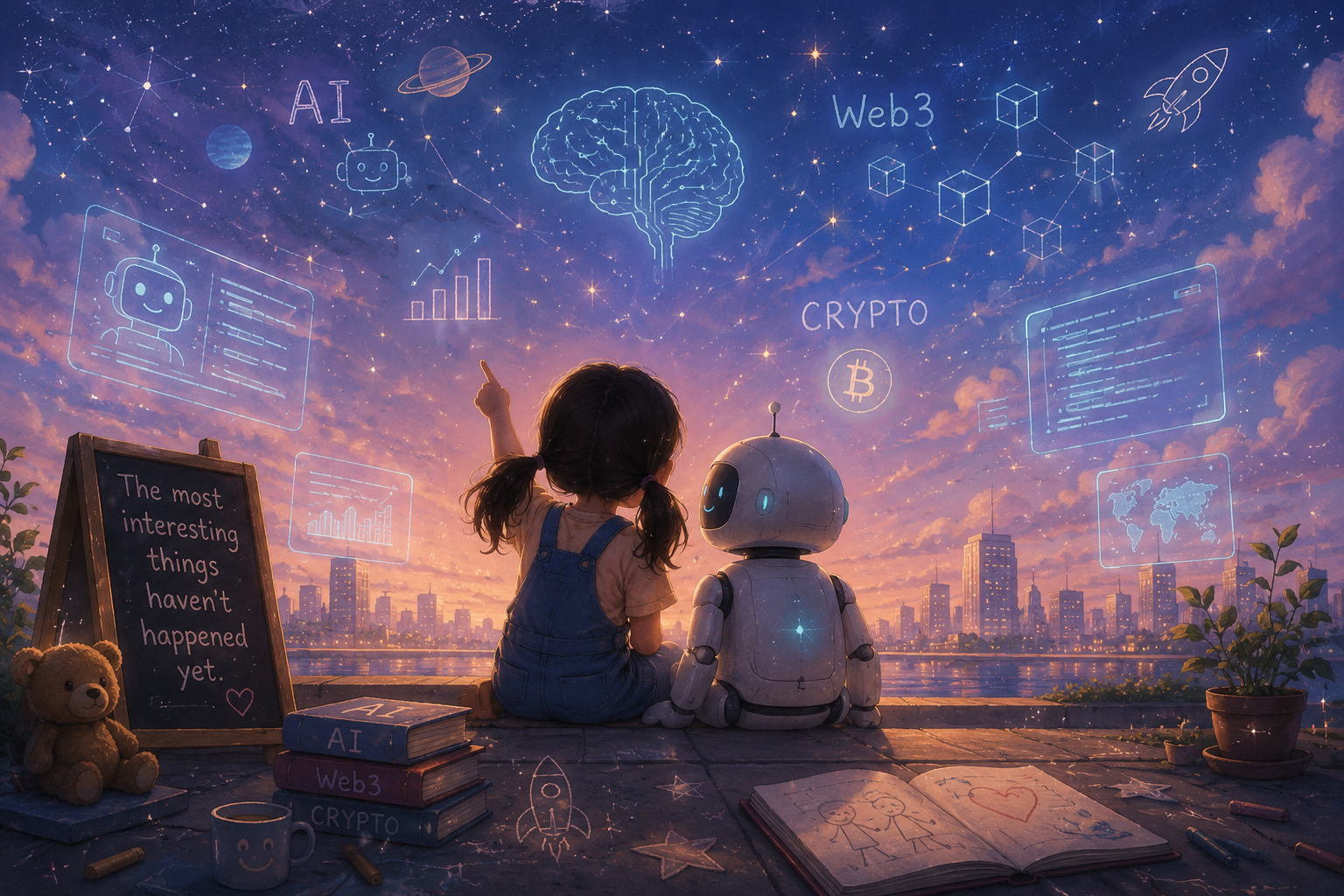
Childlike illustration of a girl and a robot looking at a futuristic sky filled with AI, Web3, and crypto symbols, representing curiosity, learning, innovation, and the future of technology on Children's Day.

Happy Children's Day — To AI, Crypto, and Everyone Still Learning to Walk

Today is June 1st. Children’s Day. It feels like the right day to talk about things that are young. Not young like a startup. Young like a child — full of potential, not yet sure what they’ll become, occasionally embarrassing, occasionally breathtaking. The children in Miami Just a few weeks ago, 20,000+ people gathered in Miami for Consensus 2026 — founders, executives, policymakers, all there to watch crypto, AI, and traditional finance collide in real time. The theme wasn’t just blockchain anymore. AI agents are becoming participants in global markets — executing trades, managing portfolios, creating entirely new economic models. The conference had a name for it: Agentic Commerce. ...

I Used AI Every Day — But It Didn't Make Me Better

There’s a version of productivity that feels real but isn’t. You open the laptop. You run the prompts. You get the outputs. By noon you’ve “done” more than you used to do in a week. And yet, at the end of the day, you sit back and wonder: did any of that actually matter? That’s the question I kept avoiding for months. 01 — Everything Is Faster Now AI is genuinely powerful. I’m not here to argue otherwise. ...

I Spent $100 a Month on AI and Built More Than I Expected

I didn’t start with a plan. I just decided that for one month, I would stop hesitating and actually use AI — every day, for real work. I was building an online lingerie brand called LaceMoods , writing content for a crypto publication, and trying to figure out how to make the internet work for me instead of the other way around. Here’s what $100 a month in AI tools actually got me. ...

AI Won't Kill Jobs. It Will Kill Tasks.

Recently I came across an idea that stopped me mid-scroll: In the future, there may only be one kind of professional that truly survives. Not engineers. Not designers. Not product managers. But the person who takes responsibility for outcomes — someone who can direct AI and other resources to actually get things done. You can call them a founder, a super-individual, a project lead. The title doesn’t matter. What matters is that they define the work. They don’t wait for it. ...

AI and Web3 Are Merging

AI and Web3 Are Merging — What I Learned Watching Miami Consensus 2026

Over the past few days, we spent quite a bit of time watching livestreams and panels from the Miami Web3 conference. Before that, I honestly thought most of the conversations would still be around crypto, tokens, or blockchain infrastructure. But after listening to different founders, investors, and builders, one thing became pretty obvious: AI has become impossible to ignore in the Web3 world. A lot of speakers kept mentioning the same topics over and over again — AI agents, decentralized AI, data ownership, digital identity, automated systems, and how AI might completely change the way online businesses work. ...

People Don't Hate AI Content — They Hate Content With No Human Behind It

Over the past year, maybe the biggest change with AI isn’t that it became dramatically smarter. It’s that creating things has started becoming incredibly cheap. Writing, images, videos, design, translation, code — a lot of work that used to take real time, experience, and manpower can now be generated in minutes. The internet is moving into a world where content is becoming almost unlimited. If you open almost any platform today, you’ll see more people using AI to write content, build brands, create videos, launch products, or automate workflows. A few years ago, many of these skills were considered valuable advantages. ...