
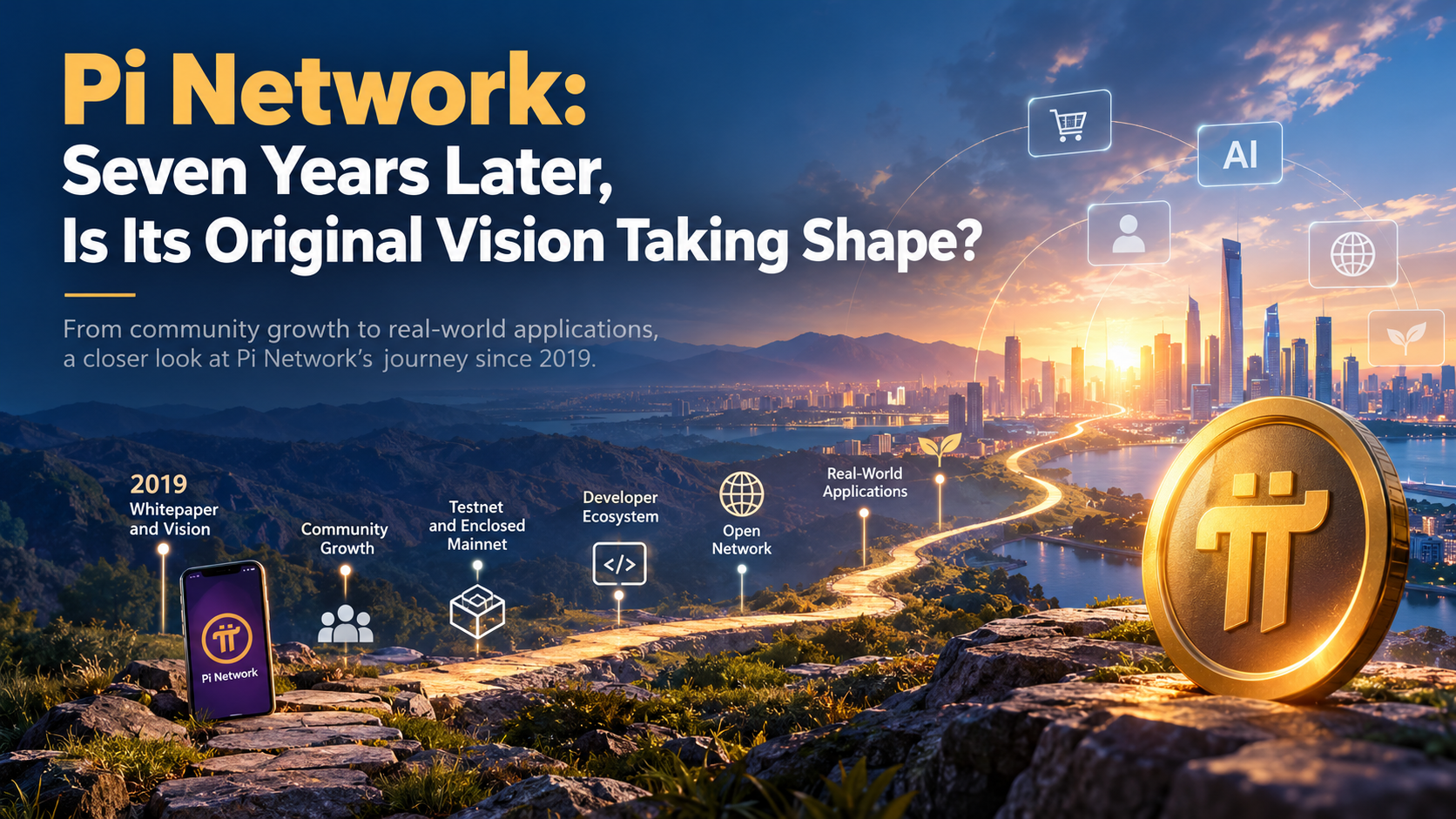
In 2019, when Pi Network first launched, it took a different approach from many cryptocurrency projects. Users did not need expensive mining equipment or extensive knowledge of blockchain technology. By participating through a mobile application, they could begin earning PI. This accessible model helped Pi Network build a large global community, but it also made the project one of the more controversial experiments in the cryptocurrency industry.
Some observers focused on its user base, while others questioned its lengthy development timeline. For many, Pi Network remained little more than a mobile mining project. After its transition to Open Network on February 20, 2025, discussions increasingly centered on PI’s market price and trading performance.
Yet a closer reading of Pi Network’s original 2019 whitepaper and its updated development plans from 2021 reveals a broader ambition. Creating a tradable cryptocurrency was never the project’s only objective.
Pi Network envisioned an inclusive, peer-to-peer economy supported by PI, where participants could become consumers, application users, merchants, developers, or contributors to the network itself.
Seven years later, Pi Network has evolved from a mobile participation model into a blockchain ecosystem with an open network, identity verification infrastructure, wallets, developer tools, and applications. Developments in 2026, including work on smart contracts, a stablecoin strategy, and preparations for its first ecosystem summit, have brought new attention to how these different components fit together.
The question is no longer simply whether Pi Network can build a blockchain or attract users. It is how much of its original economic vision is beginning to take shape.
Building a User Base Before a Trading Market
Blockchain technology has long faced a familiar problem: building infrastructure does not automatically create demand.
A public blockchain may offer efficient transactions, low fees, and sophisticated development tools, but without developers building applications or users finding reasons to use them, technical capabilities alone are unlikely to sustain an economy.
Many blockchain projects begin with infrastructure and then seek users through developer incentives, investment, and application development. Pi Network took a different route. Alongside its technical development, it made accessibility and community growth central to its early strategy.
In its original whitepaper , published in 2019, Pi Network outlined its ambition to create an inclusive cryptocurrency and smart contract platform that ordinary people could participate in and use.
Mobile mining was therefore not intended to be the destination. It was a way to lower barriers to participation and expand the network’s potential reach. Unlike Bitcoin’s proof-of-work mining, which relies on computational resources, Pi Network’s mobile participation model emphasizes user engagement and community development.
From a business perspective, the approach raises an interesting proposition: establish a potential user base first, then encourage developers and merchants to build products and services around it.
For developers, writing an application is often only the beginning. Attracting users, keeping them engaged, and eventually building a sustainable business can be much harder than creating the product itself.
By establishing a global community in advance, Pi Network hoped to offer developers access to potential users without requiring every new application to start from scratch.
Of course, participating in a network is not the same as actively using its applications. Holding PI does not automatically translate into spending it on products or services. Turning a large community into an active economic network has remained one of Pi Network’s central challenges.
From Enclosed Mainnet to Open Network: Building Through Years of Skepticism
One important detail in Pi Network’s development history is often misunderstood.
February 20, 2025, was not the date Pi Network first launched its mainnet. It marked the transition to Open Network, when restrictions on external connectivity were removed.
According to its historical roadmap , Pi Network officially launched on March 14, 2019, entered its Testnet phase on March 14, 2020, and moved into Enclosed Mainnet in December 2021.
During the Enclosed Mainnet period, the blockchain was operational, but a firewall restricted connections to external systems. Pi Network continued developing its identity verification infrastructure, mainnet migration process, developer tools, and ecosystem applications before transitioning to Open Network in February 2025.
PI was already being used in certain exchanges of goods and services within the ecosystem before Open Network began. Meanwhile, tools such as Pi Browser, Pi Wallet, developer platforms, and payment interfaces gave developers the means to experiment with applications built around the network.
The launch of Fireside Forum in 2023 offered another example of Pi Network’s efforts to explore token-based incentives beyond conventional financial transactions, this time through a social application.
When Open Network launched in February 2025, Pi Network removed its external connectivity restrictions, allowing the blockchain to interact with eligible outside systems and services. It was a significant change, opening new possibilities for developers, businesses, and third-party providers.
Still, reaching that point took time.
Some early expectations about the project’s timeline were not met, and prolonged delays contributed to questions about its pace, technical progress, and long-term prospects.
Skepticism has followed Pi Network through much of its history. Its mobile mining model, extended enclosed period, and changing expectations around the opening of the network have all attracted criticism.
For a cryptocurrency industry accustomed to rapid token launches, exchange listings, and frequent new narratives, Pi Network’s development process often appeared unusually slow.
For some long-term participants, known as Pioneers, the experience may evoke a sentiment inspired by the Chinese poet Tang Yin:
“Others may laugh at my persistence, while I quietly follow a path they do not yet understand.”
The sentiment reflects a mixture of self-awareness and conviction. Some Pioneers have continued participating despite criticism, hoping to see the project’s original vision become reality.
Ultimately, the project’s development record provides a clearer picture than either criticism or conviction alone.
Looking back at Pi Network’s original whitepaper and historical roadmap, much of its subsequent work follows the broad direction established in its early plans, even when individual milestones took longer than expected.
Testnet development, Enclosed Mainnet, identity verification, developer tools, and eventually Open Network all correspond to elements of that longer-term strategy.
Pi Network’s recurring hackathons provide another example.
Through developer initiatives and hackathons in 2023 and 2025, the project encouraged participants to turn ideas into applications. New projects emerged across areas such as social networking, gaming, e-commerce, and other services.
Not every submission became a lasting product, but the competitions created opportunities for developers to experiment, receive feedback, and contribute new applications to the ecosystem.
These developments rarely attract the same attention as token prices or exchange listings. Yet for a project attempting to build an application-based economy, they are an important part of the work.
From Community Growth to a Developer Ecosystem
Pi Network’s historical roadmap organized ecosystem development around four areas: Apps, Platform, Blockchain, and Community.
Applications provide services, the platform gives developers the tools to create them, the blockchain supports transactions and network operations, and the community provides a potential base of participants and users.
The relationship among these components matters.
A developer may have a promising product idea but lack a distribution channel. A merchant may be willing to accept PI but need reliable payment tools and customers. Users may already belong to the network but have little reason to engage beyond their existing participation.
In 2026, Pi Network continued expanding its development tools through Pi App Studio, SoloHost, SDK resources, and updated documentation, seeking to make applications easier to build and deploy.
This direction also intersects with a broader change in software development.
AI-assisted coding tools are reducing some of the technical barriers to creating applications. As development becomes more accessible, finding genuine demand and retaining users may become an even greater differentiator.
For Pi Network, its established community could provide developers with an initial audience.
In an announcement published on October 15, 2026 , Pi Network reported more than 300 mainnet applications, over 18.1 million fully KYC-verified Pioneers, and more than 420,000 nodes.
These figures provide a picture of the ecosystem’s reported scale, although they measure different forms of participation rather than a single pool of active customers or commercially successful applications.
As development tools become more accessible, Pi Network’s next challenge is less about whether people can create applications and more about whether those applications can become part of users’ everyday lives.
Consensus 2026: Utility, Business Models, and Digital Identity in the AI Era
In May 2026, Pi Network’s co-founders, Chengdiao Fan and Nicolas Kokkalis, participated in Consensus 2026 in Miami, discussing blockchain utility, business models, and digital identity in an increasingly AI-driven world.
When I followed the conference earlier this year, one development that stood out was how frequently discussions about Web3 returned to artificial intelligence. As I explored in AI and Web3 Are Merging — What I Learned Watching Miami Consensus 2026 , topics such as AI agents, data ownership, digital identity, and automated systems suggested that the industry was beginning to look beyond tokens and financial applications.
The questions raised by Pi Network’s co-founders fit naturally into that wider conversation.
Chengdiao Fan’s presentation, Aligning Web3, AI, and Blockchain for Utility, examined the disconnect that can emerge between token design and actual product development.
She argued that tokens should do more than facilitate fundraising or provide opportunities for early participants to exit. They should help products attract users, encourage participation, and support long-term utility.
Using initiatives such as Pi Launchpad, she discussed how token mechanisms could become more closely connected to product development, user involvement, and practical applications.
Nicolas Kokkalis joined a discussion titled How to Prove You’re Human in an AI World (Without Doxing Yourself), which addressed the growing challenge of verifying human identity while protecting privacy.
As AI agents and automated systems become capable of producing increasingly convincing content, accounts, and interactions, digital platforms may need new ways to establish trust.
Some services require confirmation of a person’s legal identity. Others may only need to know whether an account represents a real human being or whether multiple accounts are controlled by the same individual.
These questions connect with Pi Network’s long-standing focus on KYC and verified user participation.
Although the two discussions approached different subjects, they shared an underlying concern: how can blockchain technology support real users and useful products as digital systems become increasingly automated?
Pi Network’s early emphasis on broad participation now intersects with emerging questions about trusted digital identity, token design, and sustainable business models.
The technology landscape has changed substantially since 2019, but the project’s stated focus on users and practical applications remains recognizable.
The two founders’ presentations are covered in Pi Network’s official Consensus 2026 recap .
Stablecoins and Protocol Upgrades: Addressing the Needs of Real Commerce
On October 1, 2026, Pi Network announced a partnership with Open Standard, the company behind Open USD (OUSD), to explore potential rewards programs for Pioneers and broader utility across the Pi ecosystem. A week later, on October 8, Pi Network published a more detailed explanation of its stablecoin strategy, outlining how stablecoins could complement PI’s role within the network.
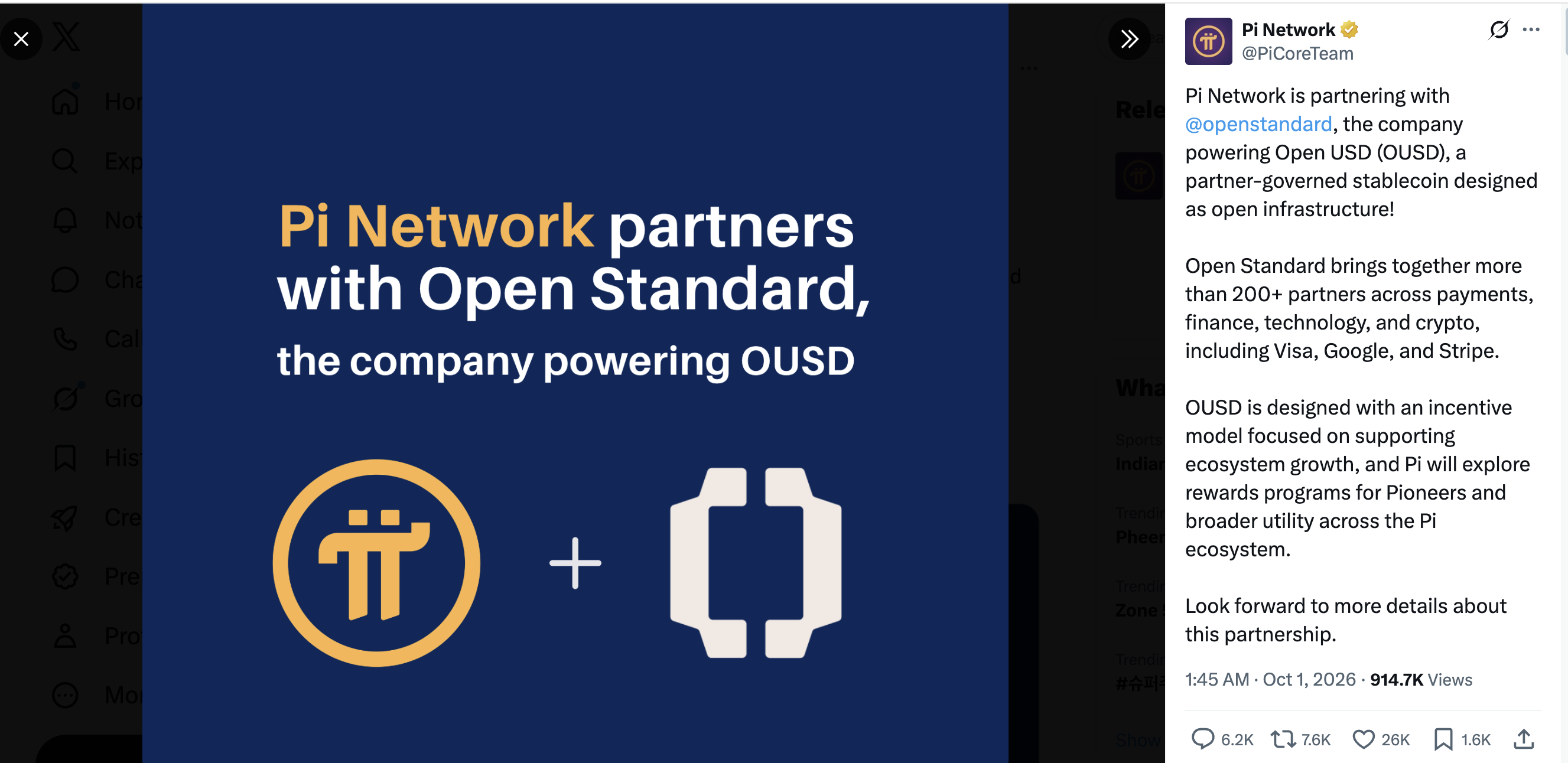
The development addresses a practical issue that becomes increasingly relevant when cryptocurrencies are used for commercial transactions.
For consumers, paying with cryptocurrency may appear straightforward. For businesses, accepting payment involves additional considerations.
Merchants must cover purchasing, production, logistics, staffing, and operating costs while managing revenue and cash flow. When the value of a payment asset fluctuates significantly, pricing and financial planning become more difficult.
Stablecoins can help address some of these challenges by offering a relatively stable unit of account, making pricing, accounting, and settlement easier to manage.
In an earlier Flowanriver article, From Thinking All Stablecoins Were the Same to Understanding USDT and USDC , I explored how two dollar-pegged stablecoins can serve different needs, even when their prices appear nearly identical. Looking beyond trading, their growing role in payments and transfers raises a broader question about what businesses actually need from digital currencies.
Pi Network’s stablecoin strategy brings that question into its own ecosystem.
In its official announcement on stablecoins , the project emphasized that PI should remain the ecosystem’s primary cryptocurrency, while stablecoins would complement it in use cases where price stability is particularly important.
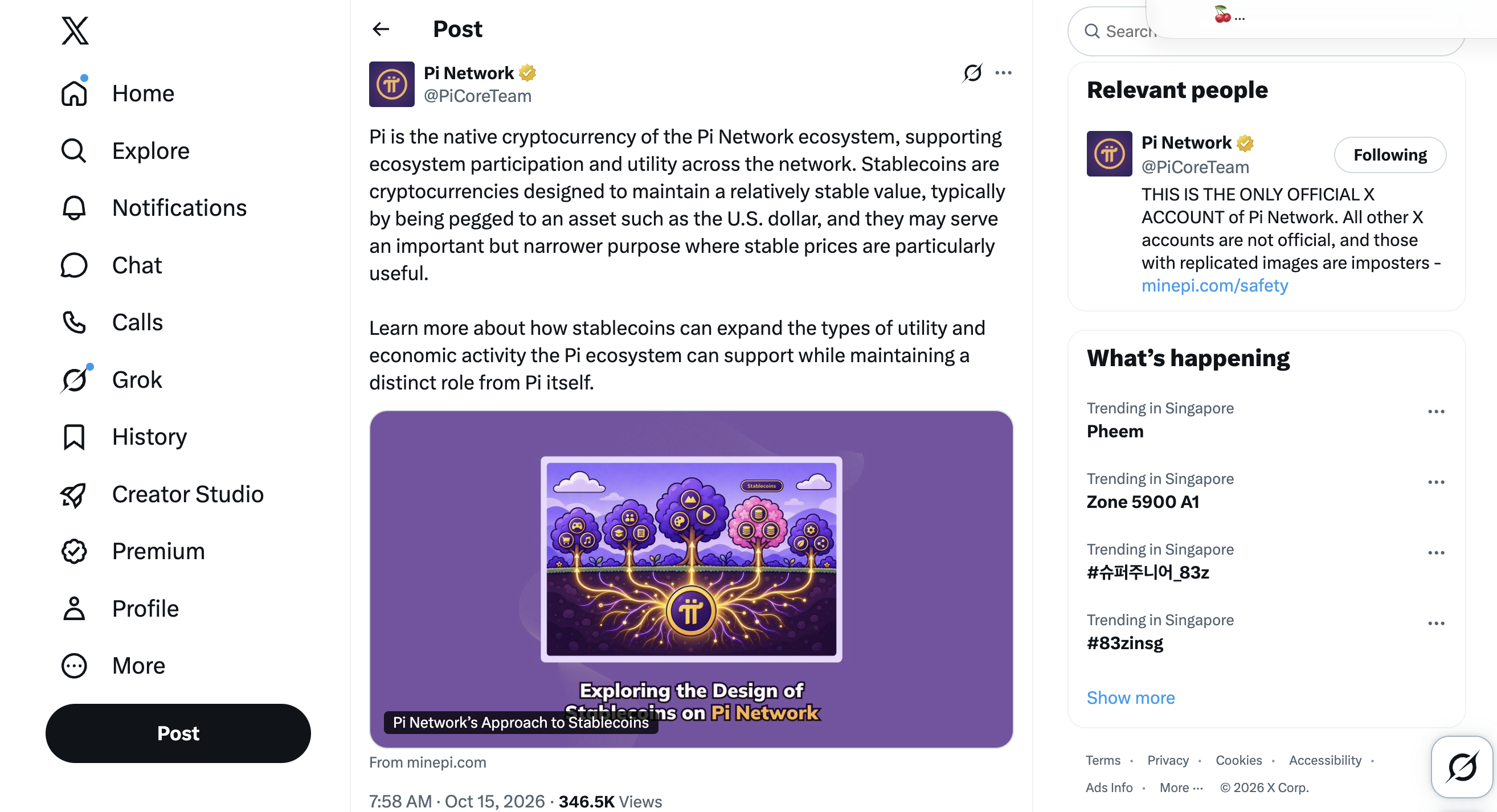
That distinction raises an important economic question: if stablecoins handle some payments and settlements, what role will PI continue to play?
Greater transaction activity within an ecosystem does not automatically produce greater demand for its native token. If consumers prefer to spend stablecoins and merchants prefer to receive them, the relationship between commercial activity and PI usage will depend on how the two assets are integrated.
Pi Network acknowledged that introducing a stablecoin alone would not guarantee a complementary relationship with PI. The outcome will depend on the design of future applications and incentives.

For now, the partnership with Open Standard is focused on exploring potential rewards programs and ecosystem utility, with specific implementation details still to be developed.
This development reflects a natural progression in Pi Network’s efforts to build an application-based economy. Attracting users and developers is one part of that process. Making transactions practical for businesses is another.
Alongside its work on stablecoins, Pi Network has continued upgrading its blockchain infrastructure.
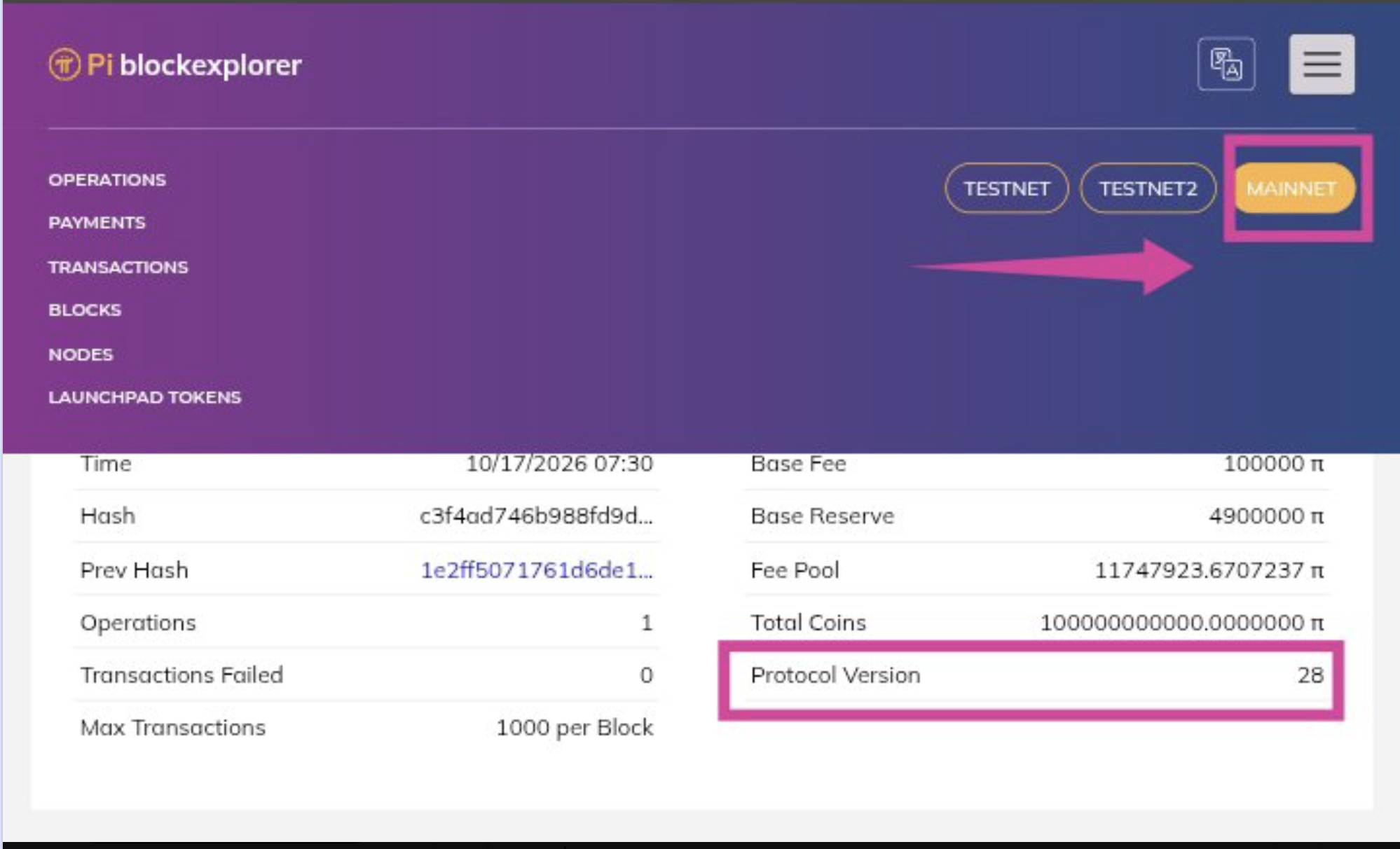
In October 2026, the project advanced its Protocol 28 upgrade, part of its broader technical development involving network operations, transaction processing, and capabilities relevant to smart contracts and application maintenance.
On October 17, a screenshot of Pi Blockexplorer shared by a community developer showed mainnet records identifying Protocol Version 28. Pi Network’s official node documentation also outlined requirements associated with the upgrade.
The official Pi Node page provides information about node software and network updates.
Protocol updates may be less visible to everyday users than new applications or payment features, but reliable infrastructure matters to developers building products intended for sustained use.
Smart contracts could support commercial functions such as subscription payments, escrow arrangements, and automated transactions based on predefined conditions.
In its Pi Day 2026 announcement , Pi Network discussed work toward smart contract capabilities and identified practical applications, including subscriptions and escrow, as areas of interest.
These upgrades are part of the technical groundwork for more sophisticated services. Their importance will become clearer as developers gain access to new capabilities and begin using them in applications.
Expanding Beyond the Internal Ecosystem
As Pi Network’s Open Network develops, its relationship with external blockchain service providers is also becoming relevant.
Pi Network appears on the publicly available blockchain coverage list maintained by TRM Labs , a company providing blockchain intelligence, transaction analysis, and risk management tools.
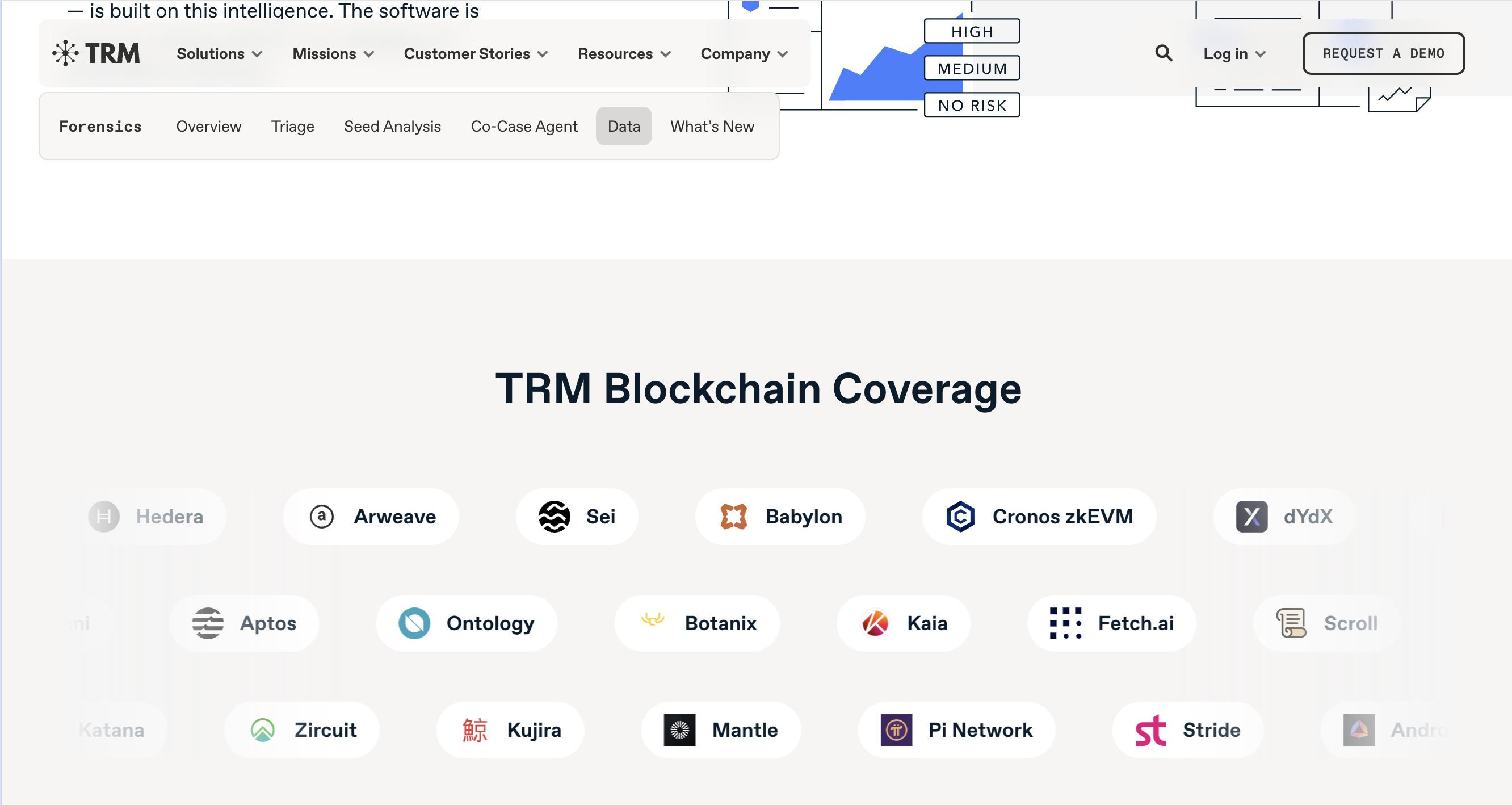
TRM Labs serves financial institutions, cryptocurrency businesses, and investigative organizations that need to assess transaction activity and blockchain-related risks.
For blockchains seeking broader commercial use, external infrastructure plays an important role alongside internal application development.
Businesses considering blockchain integration may need to evaluate transaction risks, security, and compliance requirements in addition to technical capabilities and user demand.
Pi Network’s inclusion in TRM Labs’ coverage offers one example of the network entering the wider blockchain services landscape.
The First Ecosystem Summit: Putting Developers and Applications at the Center
On October 15, 2026, Pi Network announced its first Pi Ecosystem Summit, scheduled for November 17–19.
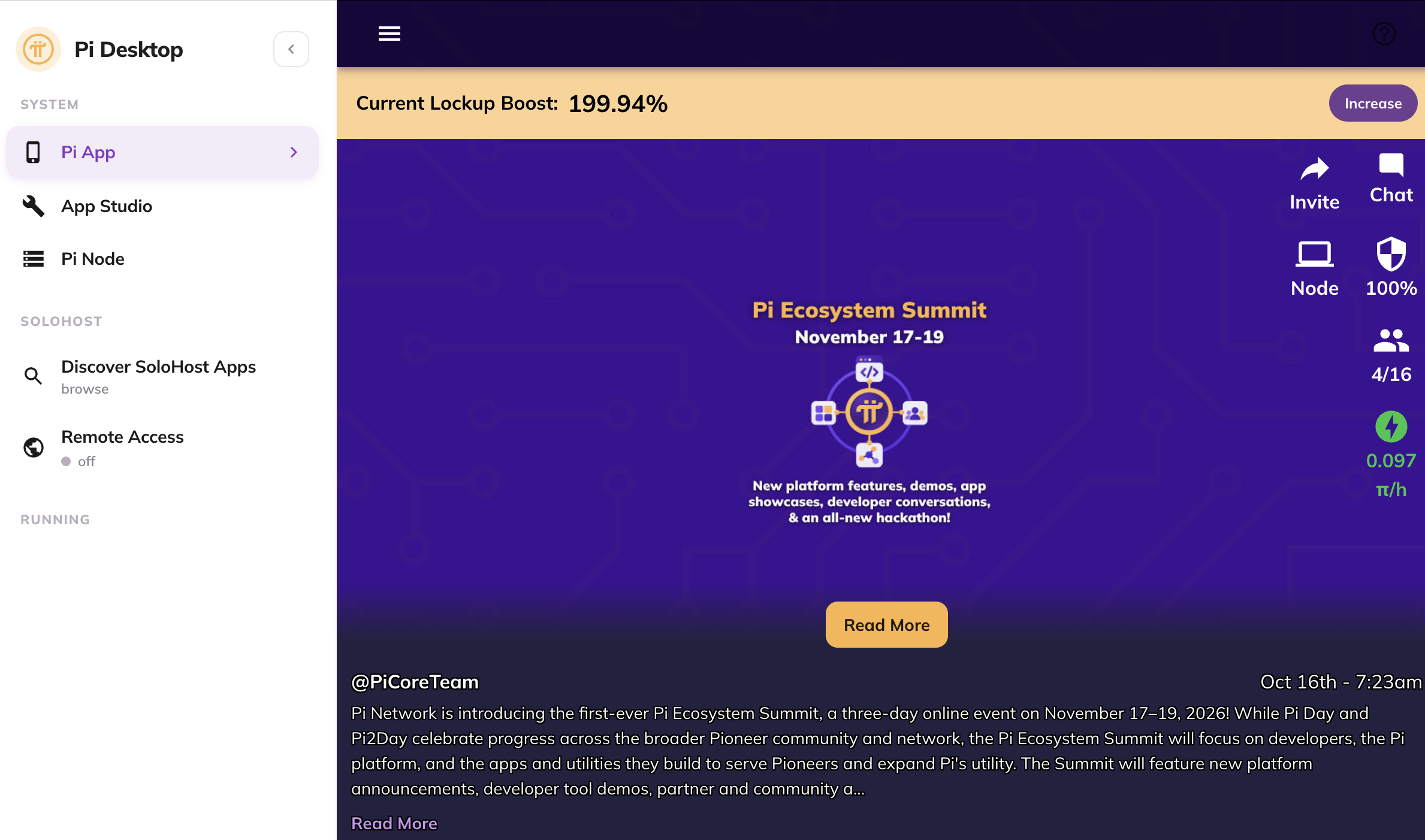
The three-day virtual event will focus on developer platforms, ecosystem applications, technical tools, and practical utility.
Unlike Pi Day and Pi2Day, which traditionally address the wider community, the summit will place greater emphasis on what developers can build using Pi Network and how the platform can support their work.
According to the official Ecosystem Summit announcement , the event will feature platform updates, development tools, existing applications, and discussions involving developers and the Core Team.
Pi Network also plans to introduce another hackathon, with further details expected during the summit.
The event continues a pattern established through years of developer initiatives and competitions.
Hackathons can attract new developers and encourage experimentation, while ecosystem events give projects an opportunity to showcase their work. But building an application is only the beginning. Keeping it useful, attracting users, and maintaining it over time are separate challenges.
For Pi Network, the next stage of ecosystem development will depend not only on attracting new projects but also on helping existing applications reach users and develop sustainable business models.
The coming summit may provide a clearer picture of how Pi Network intends to support that transition.
Seven Years Later, Revisiting the Original Roadmap
Over the past seven years, the cryptocurrency industry has moved through multiple market cycles and changing narratives, from DeFi and NFTs to meme coins, stablecoins, real-world asset tokenization, and the growing intersection of AI and blockchain.
Across these developments, more projects have begun exploring how blockchain infrastructure can support activities beyond cryptocurrency trading.
In From Fed Policy to Crypto Evolution: How Digital Finance Is Entering a New Era , I previously examined this broader transition from cryptocurrency trading toward digital financial infrastructure. Pi Network appeared in that discussion as one example of an attempt to make blockchain participation more accessible to ordinary people.
Returning to Pi Network now, and looking more closely at its development since 2019, raises a related question: how much of that original ambition has actually been translated into working infrastructure and applications?
Its journey has been unusually long, and not every milestone arrived according to early expectations. Yet the progression from mobile participation and Testnet to Enclosed Mainnet, Open Network, developer tools, and ecosystem applications reflects a recognizable continuity in its development strategy.
In 2026, the co-founders’ discussions at Consensus, the exploration of stablecoins, ongoing protocol upgrades, and preparations for the first ecosystem summit have brought different aspects of that strategy into sharper focus.
Considered individually, each development may appear incremental. Viewed against the original whitepaper and historical roadmap, they form part of a much longer effort to build an economy around participation, applications, and the use of PI.
For years, much of the public conversation around Pi Network focused on when Open Network would launch, when PI would become tradable, and how large the community had become.
Now that Open Network is operating and more technical and commercial capabilities are being developed, a different question deserves attention: how much lasting economic activity can Pi Network generate from the users, infrastructure, and applications it has spent years building?
Seven years after its launch, Pi Network’s original vision is becoming more tangible. Its long-running efforts in community development, blockchain infrastructure, and application building are beginning to connect with broader questions of commerce and digital identity.
Whether those foundations can support an economy that creates lasting value remains the test ahead.
This article is an independent analysis of Pi Network’s development based on publicly available information. It is intended for informational purposes and does not constitute financial or investment advice.